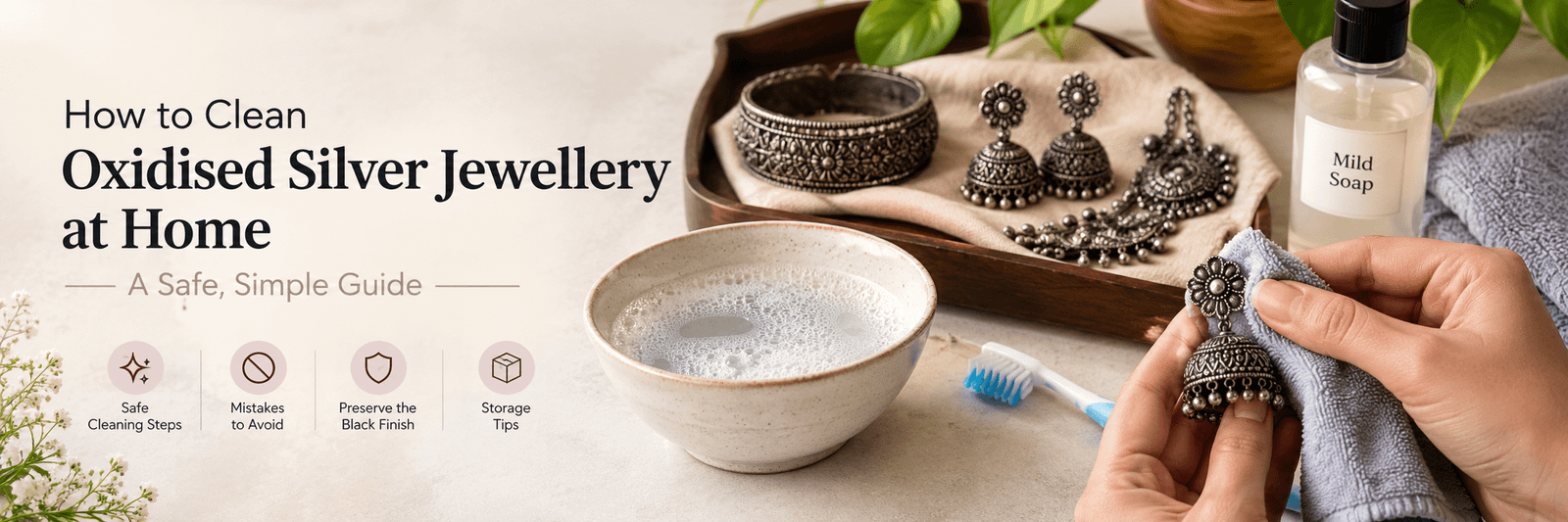
If you own oxidised jewellery, you already know the look is the whole point — that deep antique-black finish set against silver detailing. But over time, dust, sweat, and moisture can dull the shine and make the piece look tired. Learning how to clean oxidised silver jewellery the right way keeps that finish looking rich without stripping away the very thing that makes it beautiful.
Manufacturers treat oxidised pieces to look intentionally dark and antique, unlike plain silver. That means the usual “polish it till it shines” approach can actually ruin them. Here’s how to do it properly.
Why Oxidised Silver Jewellery Needs Different Care
Manufacturers polish regular silver jewellery to keep it bright and shiny. They treat oxidised jewellery the opposite way — chemically darkening the recessed parts of the design so they contrast against the raised silver areas. If you scrub it with silver polish or a jewellery dip meant for plain silver, you’ll strip that black finish and end up with a patchy piece instead of an antique one.
So when you clean oxidised silver jewellery, the goal isn’t to make it shine like new — it’s to remove dirt and buildup while keeping the black-and-silver contrast intact.
How to Clean Oxidised Silver Jewellery Safely at Home
1. Start with a dry, soft cloth
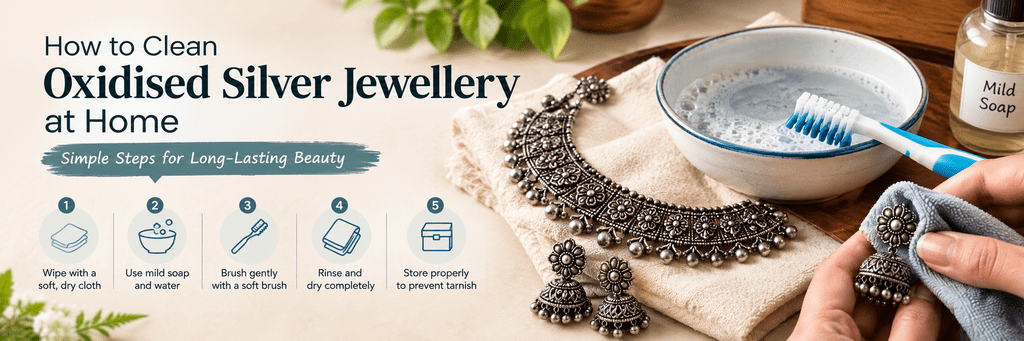
For everyday dust or light tarnish, wipe the piece with a soft, dry cloth (an old cotton t-shirt or a microfiber cloth works well). Rub gently along the design, not against it, to lift surface dirt without disturbing the finish.
2. Clean oxidised silver jewellery with mild soap and water for a deeper clean
If dry wiping isn’t enough:
- Mix a few drops of mild soap (like a gentle dish soap) into lukewarm water.
- Dip a soft-bristle brush (an old, clean toothbrush works) lightly into the solution.
- Brush the jewellery gently, focusing on grooves where dirt collects.
- Rinse briefly under running water — don’t soak the piece.
- Pat it dry immediately with a soft cloth, then let it air dry fully before storing.
3. Skip the cotton swab and alcohol method for detailed pieces
Some guides suggest alcohol on a cotton swab for tight corners. This can work on small silver-only sections, but avoid it on pieces with stones, beads, or thread work — alcohol can loosen adhesive or dull embedded stones.
What NOT to Use When You Clean Oxidised Jewellery
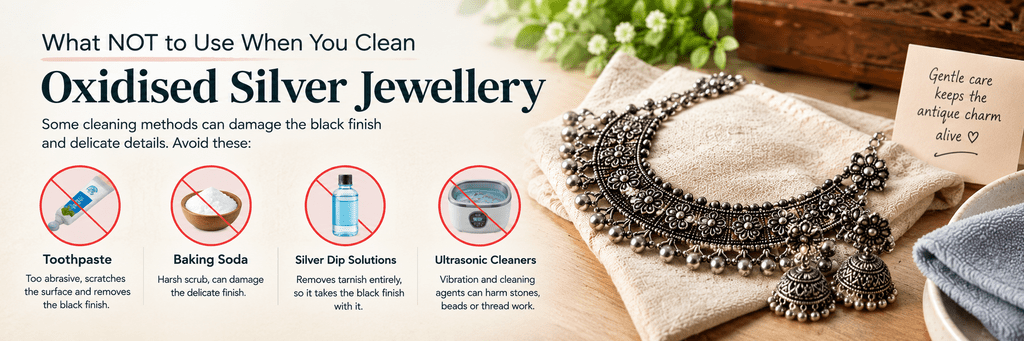
- Toothpaste — its abrasiveness scratches the surface and strips the black oxidation.
- Baking soda scrubs — the same problem; too harsh for the delicate finish.
- Silver dip solutions — these remove tarnish entirely, so they take the intentional black finish with it.
- Ultrasonic cleaners — the vibration and cleaning agents can damage stones, beads, or thread detailing common in oxidised pieces.
According to the Gemological Institute of America (GIA), gentle, mechanical cleaning methods generally preserve a piece’s finish and stones far better than harsh chemical treatments do — advice that applies directly to oxidised silver.
How to Restore Shine Without Losing the Black Detailing
If the silver highlights look dull but the black areas remain intact, use a light touch with a silver polishing cloth — only on the raised silver parts, avoiding the recessed black areas — to bring back some shine. Go slowly and check often; you can always polish a little more, but you can’t undo over-polishing.
How to Store Oxidised Silver Jewellery to Slow Down Tarnishing
- Store pieces in an airtight pouch or a zip-lock bag to limit air and moisture exposure.
- Apply perfume, lotion, and hairspray before putting on your jewellery, not after.
- Avoid storing pieces in humid areas, like bathroom cabinets.
- Store pieces separately so they don’t scratch each other.
When to Get Oxidised Jewellery Professionally Re-Done
If a piece loses its black finish from wear or accidental over-cleaning, home methods won’t restore it — a jeweller needs to redo the oxidation process. This is common for jewellery you wear often — oxidised silver earrings and bangles especially, since they see the most daily contact — and it’s a normal, inexpensive touch-up rather than a sign of a flawed piece.
No. Toothpaste is abrasive and will scratch the surface and remove the black oxidised finish, leaving the piece looking patchy.
A quick dry-cloth wipe after each wear is enough. A deeper soap-and-water clean once every few weeks (or when visibly dirty) is usually sufficient.
Yes — the darker areas are intentional and part of the antique design. Only the raised silver areas should look bright.
Looking for oxidised silver jewellery that’s built to last? Browse our silver jewellery collection for handpicked pieces in traditional and contemporary designs.